
Tinley Park, IL · Garage Door Service
Garage Doors From Before Insulation Rules Existed
Most Tinley Park garage doors date to the 1960s-70s building boom, before insulation standards existed. Here's what that means for cold-weather performance and repairs.
- Repairs & new doors
- Springs & openers
- Serving 7 nearby communities
The Problem
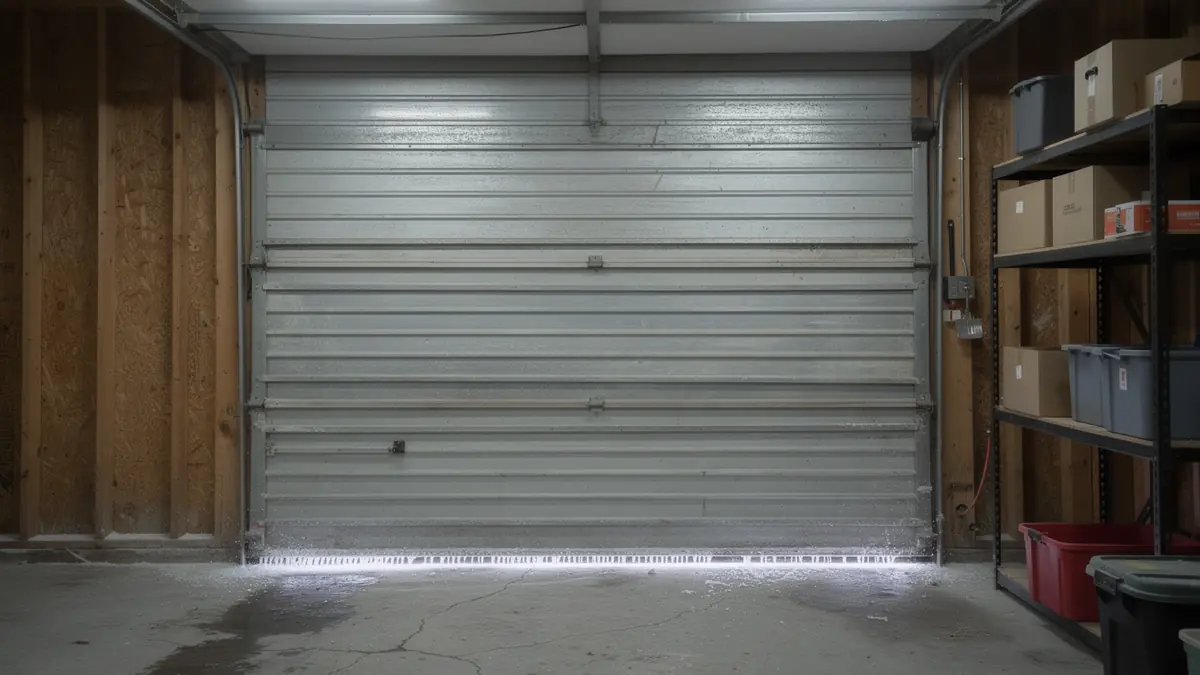
Housing in this area went up mostly between 1938 and 2004, with the median build year landing around 1972. That means a big share of the garages behind these houses got their doors during the 1960s and 70s construction wave, long before insulated steel doors were standard equipment. A single-layer steel or wood panel door from that era has no foam core, no thermal break, and often no weatherstrip worth mentioning. It was built to keep rain and raccoons out, not to hold heat in. Across the 85 named areas that make up this stock, that single fact explains most of the complaints we hear: cold floors in the room above the garage, a chill coming through the shared wall, condensation beading on the inside panel. The door isn't broken. It was just never built to the job homeowners now expect of it. Swapping the opener or tightening the track won't change that. The fix, when there is one, usually means replacing the panel assembly with an insulated door, not patching the one that's there.
How Local Conditions Play In
This is a cold, moderate climate zone, and that matters more for an uninsulated door than almost anywhere else. A 1960s or 70s steel panel contracts in January cold enough to open gaps at the seams that weren't visible in July. Hardware reacts the same way: springs and rollers sized for a lighter, thinner original door work harder once ice and condensation add weight, and metal fatigue shows up faster in a 50-year-old panel than a newer one. Houses built in this median 1972 range also tend to have the garage tucked against living space rather than detached, so a cold, leaky door isn't just a garage problem, it's a utility bill problem. None of this means the door needs replacing on a schedule. It means that when a door from this era starts sticking, binding, or rattling worse in winter than summer, the cold is exposing age that was already there, not causing new damage.
When Waiting Is Fine
Not every draft or cosmetic ding on an old door is worth a service call. If the door still opens and closes square, seals reasonably well at the bottom, and the only issue is that the room above the garage runs a little cold, that's a door doing an old job adequately. Adding a bottom seal or weatherstrip kit is a cheap first step before anything bigger. We also won't tell you to replace a structurally sound 1970s door just because it lacks foam insulation - if the panels aren't warped, the track is straight, and the springs are rated right for the weight, it can keep working for years. Replacement earns its cost when the door is also failing mechanically: panels rusting through, hardware original to a house built decades ago, or a steel skin thin enough to dent under normal use. Insulation alone isn't a reason to tear out a door that's otherwise sound.
What to Look At First
Start at the bottom seal and the weatherstrip along the sides and top. On a door built before insulation rules existed, that rubber is often original or close to it, and it's the cheapest thing to replace. Next, check the panel itself for flex - press on it between ribs. A single skin of steel that oil-cans under light pressure has no insulation layer behind it, confirming the era. Look at the springs: a torsion or extension spring sized for an uninsulated door is lighter than what a retrofit insulated door needs, so if you're planning to upgrade the panel, the spring has to be re-rated too, not reused. Finally, check the garage side of the shared wall for daylight around the frame, which is common on houses from this 1938-2004 build range where the opening was never sealed to current standards. We don't do foam-injection retrofits on an old steel skin - that's a job for a new door, not a repair kit.
Frequently asked questions
Is my garage door too old to insulate?
If it's an original steel or wood panel from the 1960s-70s era common in this area, adding foam to the existing skin usually isn't practical. The panel wasn't designed to hold a foam core, so insulating it well means replacing the door, not retrofitting the old one.
Why is my garage colder than the rest of the house?
Houses here median around 1972 in build year, and garages from that period typically got single-layer steel or wood doors with little or no weatherstripping. In a cold moderate climate, that uninsulated panel is usually the biggest heat loss point in the garage.
Do I need to replace the whole door or just add a seal?
If the door is structurally sound and just drafty, a new bottom seal and side weatherstrip often solves most of the complaint cheaply. Full replacement only makes sense once the panel itself is failing or you want real insulation value, not just draft control.
Will a new insulated door need new springs too?
Usually, yes. An insulated steel door weighs more than the original single-layer panel it replaces, and springs sized for the old door won't balance the new one correctly. That's a detail worth checking before the install, not after.
Related garage door services in Tinley Park
More garage door guides
Book garage door service in Tinley Park
Call now or request a quote - tell us what the door is doing and where you are.