
Tinley Park, IL · Garage Door Service
Why Safety Sensors Drift on Tinley Park Garages
Tinley Park garages mostly date from the 1960s-70s building boom, and cold-climate frost movement is the main reason safety sensors drift out of alignment on these older slabs.
- Repairs & new doors
- Springs & openers
- Serving 7 nearby communities
The Problem
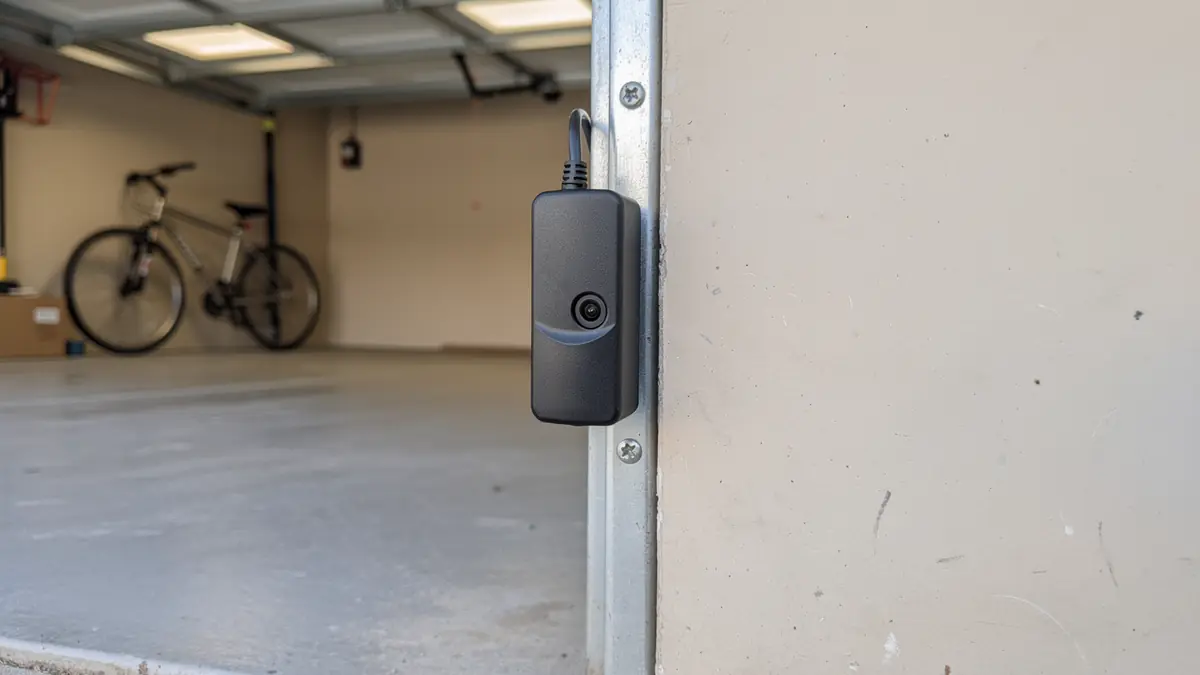
The two small eyes near the bottom of your track are the photo sensors that stop the door from closing on something in its path. When they're out of alignment, the opener either refuses to close the door at all or closes it and reverses halfway down. Most calls we get about this aren't sensor failures - the sensors themselves rarely die. What happens is the brackets holding them shift a few degrees, the beam no longer lines up eye-to-eye, and the opener reads that as an obstruction every time.
This isn't a defect in the sensor. It's a bracket problem, and brackets move for reasons tied to the building itself. On a garage built in the last decade, with a newer slab and newer track hardware, this happens occasionally from a bump with a ladder or a bike. On older stock, it happens on its own, repeatedly, without anyone touching anything.
If you're resetting the sensors every few months and they keep drifting back, that's a sign the problem is structural, not electrical - the bracket mount itself is moving, not the sensor failing.
How Local Conditions Play In
Housing in this part of Tinley Park mostly went up between the 1960s and 1970s, with the wider stock across the area spanning 1938 to 2004. Garages from that build era are commonly slab-on-grade with track hardware mounted straight to wood jambs or light steel framing that was never engineered for the heavier opener motors and sensor brackets added decades later as retrofits.
Tinley Park sits in a cold climate zone with real freeze-thaw cycling every winter. Slabs poured in the 1960s and 70s don't always have the frost depth protection that's standard now, so the slab edge near the garage door opening moves slightly as the ground freezes and heaves, then settles again in spring. That seasonal movement travels up through the track and the sensor brackets attached to it. A sensor that was dead-on in October can be a half-inch off by February, then drift back again by May.
This is also why sensor alignment complaints spike seasonally here rather than staying constant year-round - it tracks with the freeze-thaw cycle, not with how often the door gets used.
When Waiting Is Fine
Not every blinking sensor light is urgent. If the door still closes all the way and reverses properly when you wave a hand in front of the beam, the system is doing its job even if the alignment is imperfect. A sensor that's slightly off but still catching obstructions is a nuisance, not a hazard, and you can live with the LED flicker until it's convenient to deal with.
If the misalignment is new - within the last week or two - and your garage sits on one of the older slabs common across this area's 1960s-70s stock, it's worth waiting a cycle or two through a temperature swing before calling anyone out. Sometimes the bracket settles back on its own as the slab shifts the other direction. We won't put a truck on your schedule for something that corrects itself in a week.
The one thing not to wait on: a door that closes on an obstruction without reversing at all. That's not a drift issue anymore, that's a safety failure, and it needs a same-week look regardless of season.
What to Look At First
Before assuming the sensor itself is bad, check the bracket it's mounted to. On the older track hardware common in this area's 1938-2004 housing stock, that bracket is often just sheet metal screwed into wood that's shifted slightly over the decades - loose screws are more common here than a faulty sensor.
Wipe the lenses first; dust and cobwebs across the eye read as an obstruction just like a real one does. Then sight down the beam line visually - both LEDs should be solid, not blinking, when nothing's in the path. If one blinks, that's your misaligned side.
We won't tell you to just keep re-aiming the sensor every season forever. If the bracket mount itself is cracked, rusted through, or the wood behind it has rotted - which does happen on garages from the 1960s and 70s that never had the jamb replaced - realignment is a temporary fix and the bracket needs replacing instead. That's a short job, but it's a different job than a five-minute sensor nudge.
Frequently asked questions
Why do my garage door sensors keep going out of alignment every winter?
Your garage likely sits on an older slab typical of the 1960s-70s Tinley Park building boom, and those slabs move slightly with winter freeze-thaw cycling. That seasonal ground movement travels into the track and sensor brackets mounted to it, nudging the beam off-line. It tends to correct partially in spring, then drift again next winter.
Is a blinking sensor light an emergency?
No, as long as the door still stops and reverses when something crosses the beam. A blinking LED means the beam is misaligned, which is a nuisance, not a safety failure. It becomes urgent only if the door closes on an obstruction without reversing - that needs attention right away.
Can I fix sensor alignment myself?
Often yes. Clean both lenses, loosen the mounting screws slightly, and adjust until both LEDs show solid rather than blinking. If the bracket itself is loose, cracked, or mounted to rotted wood - not uncommon on garages from the 1960s and 70s - realignment won't hold and the bracket needs replacing.
Related garage door services in Tinley Park
More garage door guides
Book garage door service in Tinley Park
Call now or request a quote - tell us what the door is doing and where you are.