
Tinley Park, IL · Garage Door Service
When the Power Drops and the Opener Won't Budge
Tinley Park homes built mostly in the 1960s-70s lean on older openers without battery backup. Here's what a power outage really does to that setup.
- Repairs & new doors
- Springs & openers
- Serving 7 nearby communities
The Problem
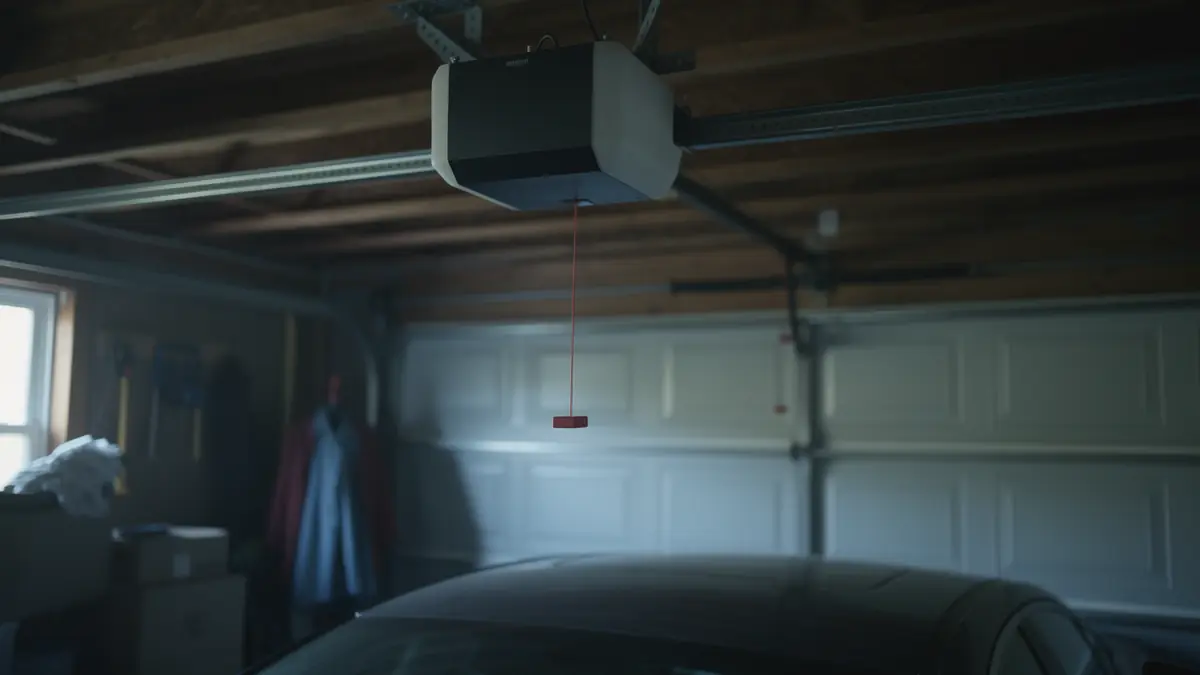
Most of the garage door openers we get calls on in Tinley Park aren't new. Housing in this area went up mostly between 1938 and 2004, with the median build year sitting around 1972, and the bulk of the stock across the 85 named areas in this part of the south suburbs dates to the 1960s and 70s. That means a lot of openers out there are originals or first replacements, chain-drive units wired straight to a single circuit in the garage, no battery backup, no smart hub, nothing. When the power outages, the opener doesn't fail gracefully. It just stops, mid-cycle sometimes, with the door half up or half down and the trolley locked wherever the chain left it. On a newer opener with a backup battery, that's a non-event. On the kind of unit that's common in a house built in 1972, it means the door is stuck until the power comes back or someone finds the manual release cord. That cord gets tested maybe once a decade, usually during an outage, which is the worst possible time to find out it's painted over or buried behind storage bins.
How Local Conditions Play In
This area sits in a cold-moderate climate band, which matters more for openers than people expect. Cold doesn't just stiffen springs and tracks, it thickens the grease on an aging drive gear or chain, which makes the opener's motor work harder to do the same lift it did in July. Add a power flicker on top of that, and you get a double hit: the opener loses its cycle memory at the exact moment it's already straining against cold-thickened hardware. On a chain-drive unit from the 1970s or 80s, that combination is a common reason the motor runs but the door doesn't move, or moves partway and reverses. Newer belt-drive openers handle the cold better and most have some form of backup, but across 228,728 owner-occupied houses in this service area, a lot of garages are still running what came with the house, or a straight swap of the same vintage. That's not a flaw in the house. It's just what the age of the stock here means for how the opener behaves when the grid hiccups.
When Waiting Is Fine
If the power comes back in a few minutes, you don't need to do anything. Most openers reset themselves once current is restored, and the door will cycle normally on the next press of the button. If the door was already open when the power dropped and it's sitting safely in the up position, there's no rush to force it down manually just to feel like you've done something. Pulling the manual release while the door is up means it's going to come down fast and heavy on its own weight, and on an older torsion setup, that's not something to do casually. The honest answer here is that a short outage on a door that was already resting, up or down, usually needs nothing from you at all. Where it's worth paying attention is if the outage happens mid-cycle, with the door caught partway and the opener now in an unknown state. That's a different situation, and it's covered next.
What to Look At First
If the door is stuck partway and the power's back on, don't keep hitting the button. Repeated tries on a motor that's already confused about its position can strip the gear or burn the drive, and on an opener this old, that part may not be a quick find. First, locate the manual release cord and pull it to disengage the trolley, then lift the door by hand to check it moves freely on the tracks. If it's heavy, uneven, or drags on one side, the opener isn't your problem, the spring or cable balance is, and that's not a job to force through on a disengaged opener. If the door lifts smooth and even, the opener likely just needs a manual reset per its own instructions before you reconnect it. One honest limitation: we don't carry every obsolete chain-drive part for openers from the 1970s and 80s on the truck, and sourcing a control board for something that old can take longer than a same-day fix. Sometimes the straight answer is that the opener's reached the end of its useful life, not that it needs one more part.
Frequently asked questions
Why did my garage door opener stop working the moment the power came back on?
On older chain-drive openers common in homes built through the 1970s and 80s, a power interruption mid-cycle can leave the motor's position memory out of sync. When power returns, it may try to run the same partial cycle and stall or reverse. A manual reset, following the opener's own instructions, usually clears it.
Does my opener need a battery backup?
If your opener predates battery backup as a standard feature, which is common on units original to houses built here in the 1960s-80s, it has none. Whether to add a newer unit with backup depends on how often outages actually affect you and how much that stuck-door scenario matters to your routine.
Why is my opener straining more in winter?
Cold thickens the grease on an aging drive chain or gear, so the motor works harder to move the same door. Combined with any power interruption, an older unit can stall partway through a cycle instead of completing it.
Related garage door services in Tinley Park
More garage door guides
Book garage door service in Tinley Park
Call now or request a quote - tell us what the door is doing and where you are.