
Tinley Park, IL · Garage Door Service
Garage Door Service for Country Club Hills Homes
Tinley Park Garage Door Pros serves Country Club Hills homes built mostly in the mid-1970s, where steel panel doors and extension springs are the norm, not torsion.
- Repairs & new doors
- Springs & openers
- Serving 7 nearby communities
The Houses Here
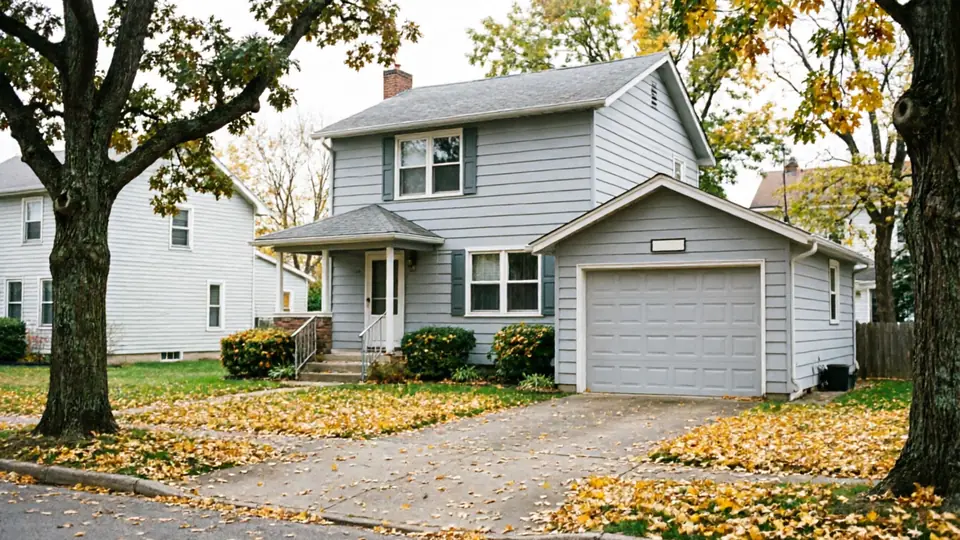
Country Club Hills sits about four miles from our shop in Tinley Park, and the houses here cluster around a median build year of 1976 - a few years newer than the 1972 median across our whole coverage area. That gap matters more than it sounds. Homes from the late 1960s and early 1970s often got heavier, simpler one-piece or early sectional doors on whatever hardware was cheapest that year. By 1976 steel sectional doors had taken over in a lot of new construction here, usually paired with extension springs mounted along the horizontal tracks rather than a torsion bar over the opening. We still see some outliers - a street or two with older stock closer to the 1938-2004 range that spans the broader service area - but the mid-70s steel-and-extension-spring combination is what we run into most when a call comes in from this part of town. The region overall sits in a cold-moderate climate band, which means temperature swings put real stress on steel panels and spring tension twice a year, in spring thaw and the first hard freeze.
The Calls We Get From Here
We don't have a depot in Country Club Hills - we come from Tinley Park, about four miles away, so every job here is a drive, not a walk down the street. The calls tend to follow a pattern tied to the housing stock: extension spring failures, not torsion spring failures, because that's what most of these mid-70s doors were built with. Country Club Hills has roughly 5,353 households, and with a median income near $77,463, we hear a lot of homeowners asking us to repair before we even mention replacement - a steel door from this era is often worth saving if the panels haven't rusted through. We also get calls after a long cold snap, when a frozen bottom seal or a brittle extension spring finally lets go. What we don't get much of here is torsion-spring work, which is more common in the newer pockets of the broader service area built after 2000.
Common Jobs Here
The job we see most in this part of town is extension spring replacement on a two-car steel door - usually both springs at once, since if one has fatigued after decades of cold-weather cycling, the other is close behind. Second most common is roller and track work: the stamped steel rollers that came standard on mid-70s doors wear out and start binding in the track, especially where the driveway slopes toward the garage and rain or snowmelt gets into the bottom section. We also replace a fair number of bottom seals and astragal strips, since cold-moderate winters are hard on rubber that's original to a 1976 install. Opener swaps come up too, though less because of the door itself and more because chain-drive units from that era are simply past their working life. What we don't do is replace a sound steel door just because it's old - if the panels are straight and the springs are the only thing gone, a spring job is the honest answer, not a full replacement.
How That Shows Up in the Door
On a house built around 1976, the first sign of trouble is usually a door that won't stay up on its own, or one that slams the last foot of travel instead of settling. That's a tired extension spring losing tension, not a torsion spring issue, and it changes what parts we bring on the truck. You might also notice the door shuddering or catching partway through its run - that's often a stamped roller binding in a track that's picked up a slight bow over fifty years of seasonal expansion. In the coldest stretch of winter, a bottom seal that's hardened with age will let a visible gap of daylight show under the door even when it's fully closed. None of these are emergencies in the sense of needing a same-day fix, but a spring that's visibly stretched or a cable that's starting to fray is one we'd tell you not to run the opener on until it's replaced.
Frequently asked questions
Why does my garage door use two springs stretched along the tracks instead of one spring above the door?
That's an extension spring setup, common on steel doors installed in the mid-1970s, which is when most homes in Country Club Hills were built. Torsion springs mounted over the opening became more standard later. Both work fine when properly sized and maintained - the extension version just wears differently and usually needs both springs replaced together.
Is a 1976 steel garage door worth repairing or should I replace it?
If the panels are straight and rust hasn't gotten into the seams, a spring or roller repair is usually the right call - the door itself can outlast several sets of hardware. We'd only recommend replacement if the panels are bent, the track is badly rusted, or the door is undersized for current wind and insulation expectations.
Do you have a crew based in Country Club Hills?
No, we run out of Tinley Park, about four miles away, and travel to Country Club Hills for service calls. We don't keep a local depot or stock on-site here, so parts availability depends on what's already on the truck or what we can source before the job.
Garage door services in Country Club Hills
Every service our crew runs in Country Club Hills, IL.
Book garage door service in Tinley Park
Call now or request a quote - tell us what the door is doing and where you are.