
Tinley Park, IL · Garage Door Service
Why Garage Door Seals Fail Faster in Tinley Park Homes
Tinley Park homes built mostly in the 1960s and 70s have worn weather seals that let cold air in. See what causes drafts and when a repair makes sense.
- Repairs & new doors
- Springs & openers
- Serving 7 nearby communities
The Problem
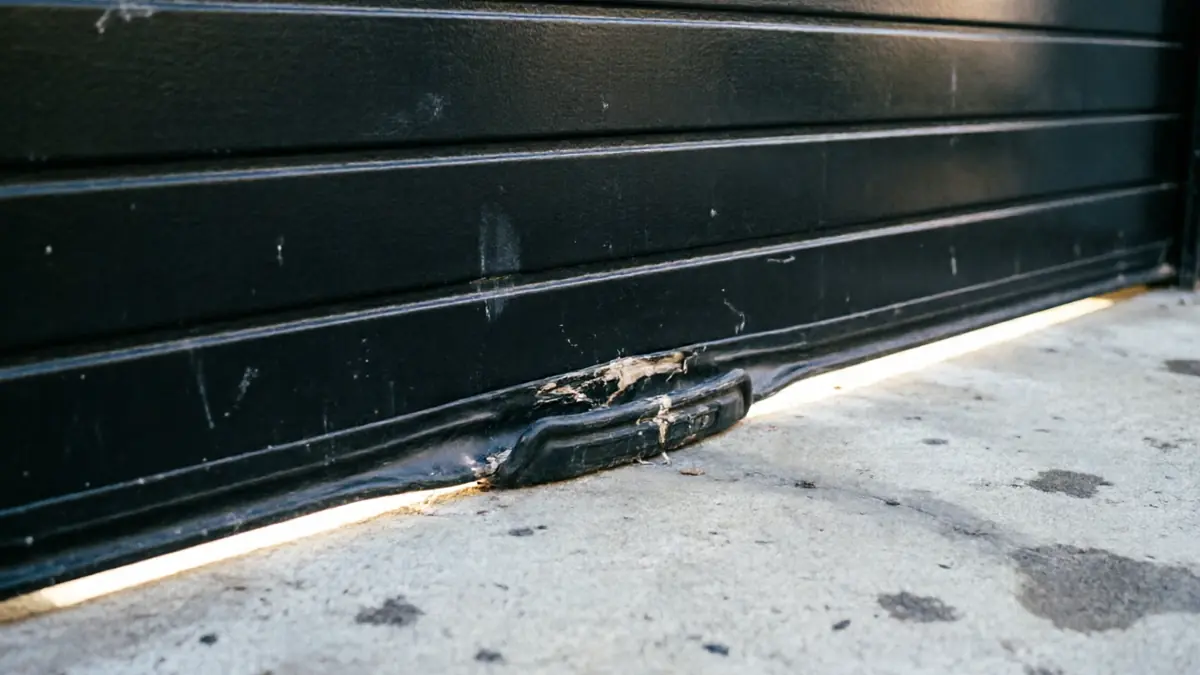
Walk into most garages in Tinley Park and you'll find the same thing: a bottom seal that's gone flat, cracked at the corners, or pulled loose from its track. Housing here runs from 1938 up through 2004, with the median build year sitting at 1972, and the bulk of the stock across the area's roughly 85 named subdivisions dates to that 1960s-70s stretch. That matters because the rubber and vinyl used in seals from that era simply weren't built to last fifty-plus years. They were good products when installed. They are not good products now.
When a seal fails, you don't usually notice right away. It's not a dramatic break - it's a slow loss of contact between the door and the slab. Cold air finds the gap first, usually at the corners where the seal has shrunk back from the jamb. Then you start noticing a draft across the garage floor, a cold spot on the wall that shares the garage, or a wet line under the door after a storm. None of that means the door is broken. It means the seal stopped doing its job months or years ago and nobody looked.
How Local Conditions Play In
Tinley Park sits in a cold moderate climate band, which means the seal isn't dealing with one hard freeze and then mild weather - it's cycling through freeze and thaw over and over across a winter. Vinyl and rubber both get brittle in sustained cold, and every time the temperature swings back above freezing and drops again, the material contracts and expands a little more than it did the last time. Eventually it doesn't spring back. It just sits there, cracked, with daylight showing through the gaps.
This is also why a seal that looked fine in October can be letting in a steady draft by February. The cold doesn't break it in one shot. It works on it all season. Houses built to 1960s-70s standards, which describes most of the stock in this area, often have narrower seal channels than current doors use, so even a correctly sized replacement seal sometimes needs a little extra push to seat right. That's a five-minute adjustment, not a big deal, but it's worth knowing before you assume the new seal is defective.
When Waiting Is Fine
Not every gap needs an emergency call. If you've got a thin line of daylight at one corner of the bottom seal and the garage isn't heated or attached to a living space, that's a minor loss of efficiency, not a structural problem. A lot of owners get through a full winter with a slightly imperfect seal and just notice a colder garage - annoying, not damaging.
Where we'd tell you to wait: if the seal is still pliable and just a bit worn, and the door otherwise closes flush and latches properly. Seal material is cheap and the job is quick, so there's no upside to replacing it mid-winter versus waiting for a stretch of decent weather, unless the gap is big enough that you're seeing standing water or ice forming on the inside of the door. One honest limitation here - we don't carry every seal profile on the truck for older 1960s and 70s track styles, so if yours is an uncommon channel width, there can be a short wait on the part.
What to Look At First
Start at the bottom seal, since that's the one doing the most work and taking the most abuse from the slab. Press a finger along its length - if it's hard or cracks instead of flexing, it's done. Next, check the vertical weatherstripping along both sides of the door opening; on the older 1960s-70s builds that make up most of this area's housing, these strips are often original and brittle enough to crumble when you bend them.
Look at the threshold too, especially if the garage floor has settled or shifted over the decades - a lot of homes from that 1938-2004 build range have slabs that aren't perfectly level anymore, which leaves a gap no seal can fully close on its own. Last, check where panels meet at the sides; gaps there usually point to worn rollers or a track that's drifted out of alignment rather than a seal problem, and no amount of new weatherstripping fixes a misaligned track.
Frequently asked questions
Why does my garage feel colder than it used to even though the door looks fine?
The door panel itself rarely changes, but the rubber and vinyl seals around it harden and shrink with age, especially after repeated freeze-thaw cycles each winter. A door that looks fine from across the garage can still have a seal pulled back enough to let a steady draft through at the corners or along the bottom.
Is a drafty garage door actually costing me anything?
If the garage is attached and shares a wall with living space, yes - cold air moving through gaps makes that wall colder and your heating system work harder. If the garage is detached or unheated, the main cost is comfort, not your energy bill, so the urgency is lower.
How do I know if it's the seal or the door itself?
Close the door and check the bottom seal for flatness, cracking, or gaps where it's pulled from the track. If the seal looks intact but you still see light around the sides or top, check panel alignment and rollers - that points to a track issue rather than a worn seal.
Can I just add a second seal on top of the old one?
We don't recommend stacking seals. It rarely seats evenly and can keep the door from closing flush, which creates a bigger gap than the one you started with. Pulling the old seal and installing a correctly sized one is a short job and holds up better.
Related garage door services in Tinley Park
More garage door guides
Book garage door service in Tinley Park
Call now or request a quote - tell us what the door is doing and where you are.