
Tinley Park, IL · Garage Door Service
What Wind Does to a Wide Garage Door in Tinley Park
Tinley Park's double-wide garage doors date mostly from the 1960s-70s building boom. Here's what wind does to a wide door built on that era's hardware, and what to check.
- Repairs & new doors
- Springs & openers
- Serving 7 nearby communities
The Problem
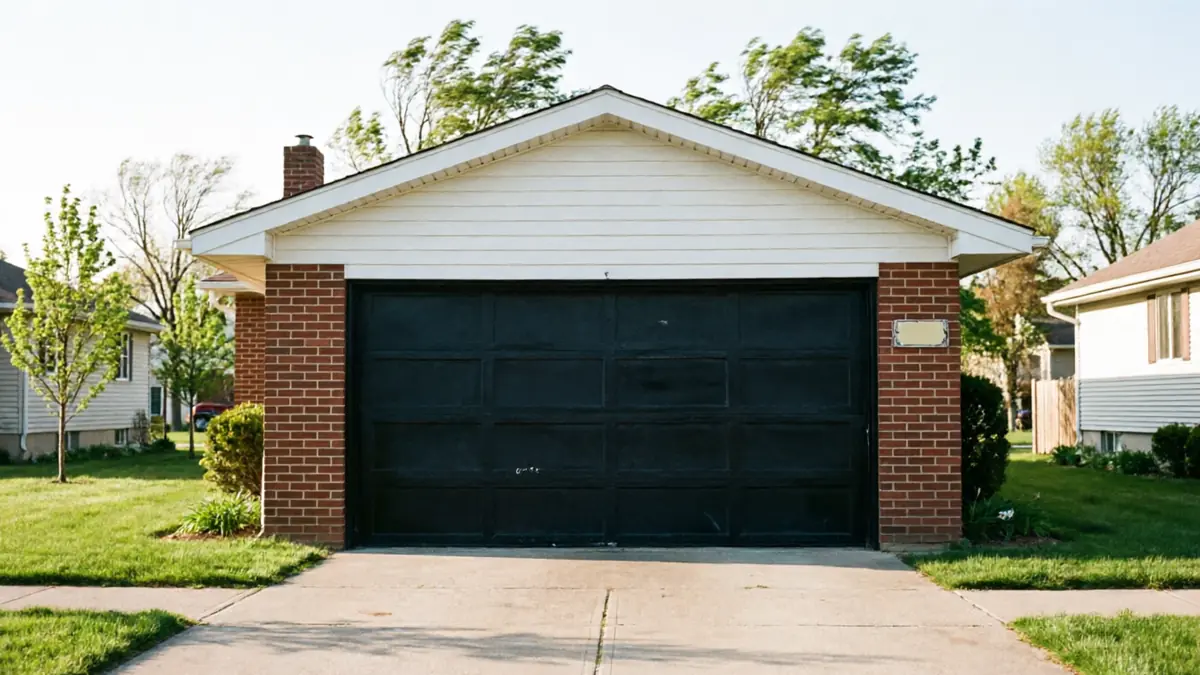
A 16-foot double door has a lot more surface for wind to push against than a single 9-foot bay, and that's the door you'll find on most ranch and split-level houses built across Tinley Park between the 1960s and 70s. When gusts hit a wide panel broadside, the load doesn't spread evenly - it concentrates at the center where the door is weakest, between the two vertical seams of a two-car opening. On a single door, the end stiles do more of that work on their own. On a double, the track and the end hardware are doing the job alone, and if that hardware dates back to the house's original build, it was likely never sized for anything beyond holding the door's own weight. Builders in that era weren't engineering for wind load on garage doors the way code requires now. That gap between what the hardware can take and what a wide panel asks of it during a hard blow is where you see the top section bow, a track pull loose from the jamb, or a center stile crack along the seam. It's not a defect so much as a mismatch between an old door and a modern expectation of what it should hold up to.
How Local Conditions Play In
Tinley Park sits in a cold-moderate climate band, and that matters for wide doors in two ways that compound each other. First, steel contracts in cold weather, and a panel that's already flexing under wind load has less give in its seams when the metal has tightened up - cracks that would just creak in July can actually propagate in January. Second, most of the housing stock here runs from 1938 to 2004 with the bulk concentrated in that 1960s-70s run, which means a lot of doors are old enough that their steel has fatigued at the stress points even before a big wind event tests them. A newer door with factory-rated wind struts handles a gust and resets. An older double door without that reinforcement takes a little bit of permanent set each time, and the sets add up. None of this means every older door is in trouble. It means a 50-year-old double door on original hardware is carrying the full force of a wide span with the margin of a smaller design, in weather that hardens the metal right when the wind asks the most of it.
When Waiting Is Fine
Not every gust is a reason to call. If your double door took a windy afternoon and you didn't notice anything - no new gap at the top, no change in how it rolls, no fresh noise when it opens - there's nothing to chase down. A single hard push of wind on a door that's otherwise sound usually just flexes and returns. Where it's fine to wait: cosmetic bowing that disappears once the door is down and the wind's died off, or a track that's always had a slight rattle on windy days and hasn't gotten worse. We'd rather you watch it for a week than pay for a visit to confirm something that was never going to fail. The honest version of this is that most doors built in that 1960s-70s window have already been through plenty of Illinois wind and are still working. A single bad afternoon doesn't mean the door is done.
What to Look At First
Start at the center of the door, not the edges - that's where a wide panel shows stress first. Look for a visible bow or seam gap when the door's closed on a calm day; if it's there with no wind pushing on it, that's a permanent set, not a momentary flex. Next, check the track brackets where they bolt to the jamb, since that's the connection that takes the sideways load when a gust hits a wide door, and older fasteners back out before anything else fails. Run the door and listen for a new grinding or popping at the center hinge between the two door sections. With median household income in the service area at $80,753, a lot of owners in this position end up weighing a full replacement with a wind-rated double door against patching the original - and for a door already near the end of its working life, replacement is usually the better money. We can walk the door with you and tell you which side of that line yours is on.
Frequently asked questions
Why does my double garage door bow in the middle during a windstorm but my neighbor's single door doesn't?
A 16-foot double door spans twice the width of a single bay, so wind load concentrates at the center seam where the two sections meet. A single door's end stiles carry more of that load on their own. It's a structural difference in span, not a sign your door is worse built.
Is my original 1960s or 70s garage door hardware strong enough for wind?
Most doors from that era were built to hold their own weight, not to meet a specific wind-load rating - that requirement came later. It doesn't mean the door is unsafe, but it does mean a wide double door on original hardware has less margin than a newer wind-rated one.
Does cold weather make wind damage to a garage door worse?
Yes. Steel gets less flexible in cold temperatures, so a panel already under wind stress has less give at its seams. In Tinley Park's cold-moderate climate, a door that would just flex in warm weather can crack or take a permanent bow in winter under the same gust.
Should I replace or repair a bowed double door?
If the bow is permanent and shows up even on a calm day, repair usually just delays the next failure. For doors already decades old, replacement with wind-rated struts is often the more practical call. We can look at the specific door and tell you honestly which way it leans.
Related garage door services in Tinley Park
More garage door guides
Book garage door service in Tinley Park
Call now or request a quote - tell us what the door is doing and where you are.